Femara: Advanced Aromatase Inhibition for Breast Cancer Treatment
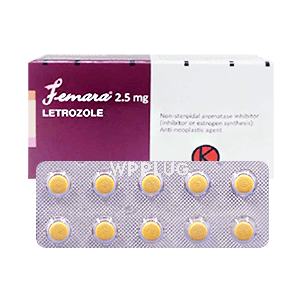
Femara
| Product dosage: 2.5mg | |||
|---|---|---|---|
| Package (num) | Per pill | Price | Buy |
| 30 | $3.20 | $96.00 (0%) | 🛒 Add to cart |
| 60 | $2.43 | $192.00 $146.00 (24%) | 🛒 Add to cart |
| 90 | $2.18 | $288.00 $196.00 (32%) | 🛒 Add to cart |
| 120 | $2.05 | $384.00 $246.00 (36%) | 🛒 Add to cart |
| 180 | $1.92 | $576.00 $346.00 (40%) | 🛒 Add to cart |
| 270 | $1.84
Best per pill | $864.00 $496.00 (43%) | 🛒 Add to cart |
Synonyms | |||
Femara (letrozole) is a potent, non-steroidal aromatase inhibitor indicated for the treatment of hormone receptor-positive early and advanced breast cancer in postmenopausal women. As a third-generation aromatase inhibitor, it represents a significant advancement in endocrine therapy by effectively suppressing estrogen production through targeted enzymatic inhibition. Its mechanism of action provides a sophisticated approach to hormone manipulation, offering superior estrogen suppression compared to earlier therapeutic options. Clinical evidence supports its use in both adjuvant and metastatic settings, establishing it as a cornerstone in the management of hormone-sensitive breast malignancies.
Features
- Contains letrozole 2.5 mg as the active pharmaceutical ingredient
- Non-steroidal aromatase inhibitor with high specificity for cytochrome P450 19 (CYP19)
- Oral tablet formulation with consistent bioavailability
- Demonstrated 97-99% aromatase inhibition at therapeutic doses
- Linear pharmacokinetics with dose proportionality
- Mean elimination half-life of approximately 2 days
- Hepatic metabolism primarily via CYP3A4 and CYP2A6
- Renal excretion of metabolites as primary elimination pathway
Benefits
- Significantly reduces the risk of cancer recurrence in early breast cancer when used as extended adjuvant therapy
- Demonstrates superior efficacy compared to tamoxifen in postmenopausal women with advanced breast cancer
- Provides effective estrogen suppression without the androgenic effects associated with some other endocrine therapies
- Offers convenient once-daily dosing that supports treatment adherence
- Shows clinical benefit in neoadjuvant settings for tumor downstaging
- May improve disease-free survival outcomes in specific patient populations
Common use
Femara is primarily prescribed for the treatment of hormone receptor-positive breast cancer in postmenopausal women. In the adjuvant setting, it is used following initial tamoxifen therapy or as initial endocrine treatment for women who have completed standard tamoxifen therapy. For advanced metastatic disease, it serves as first-line endocrine therapy. Additionally, it finds application in ovulation induction protocols for anovulatory infertility, though this represents an off-label use. The medication has also demonstrated utility in neoadjuvant chemotherapy protocols to reduce tumor size before surgical intervention.
Dosage and direction
The recommended dosage of Femara is 2.5 mg administered orally once daily, with or without food. Tablets should be swallowed whole with water and not crushed or chewed. For adjuvant treatment of early breast cancer, therapy typically continues for 5 years following completion of standard tamoxifen treatment. In metastatic settings, treatment continues until disease progression or unacceptable toxicity occurs. For patients with hepatic impairment (Child-Pugh class C), dose reduction to 2.5 mg every other day may be considered, though clinical data supporting this adjustment remains limited. No dosage adjustment is necessary for renal impairment with creatinine clearance ≥10 mL/min.
Precautions
Patients should undergo comprehensive bone mineral density assessment before initiating therapy and at regular intervals during treatment due to the accelerated bone loss associated with estrogen suppression. Regular monitoring of lipid profiles is recommended, particularly in patients with pre-existing dyslipidemia. Hepatic function should be assessed periodically, as letrozole metabolism occurs primarily in the liver. Patients with pre-existing osteoporosis should receive appropriate bone-protective therapy concomitantly. Caution is advised when prescribing to patients with severe hepatic impairment, as limited clinical data exists for this population. Cardiovascular risk assessment should be performed before and during treatment, especially in patients with existing cardiovascular disease.
Contraindications
Femara is contraindicated in premenopausal women, as it may induce ovulation and is ineffective without ovarian suppression. It must not be used during pregnancy (Category D) or breastfeeding due to potential fetal harm and absence of safety data in lactation. Hypersensitivity to letrozole or any component of the formulation represents an absolute contraindication. The medication is contraindicated in patients with severe hepatic impairment (Child-Pugh class C) without careful risk-benefit assessment. Concomitant use with estrogen-containing therapies is contraindicated, as these would counteract the therapeutic effect of aromatase inhibition.
Possible side effect
Common adverse reactions (≥10% incidence) include hot flashes (27%), arthralgia (21%), fatigue (16%), and increased sweating (14%). Musculoskeletal events such as bone pain (13%) and back pain (12%) occur frequently. Less common but clinically significant effects include osteoporosis (8%), fractures (6%), and hypercholesterolemia (5%). Cardiovascular events including hypertension (7%) and angina pectoris (2%) may occur. Gastrointestinal disturbances such as nausea (13%), constipation (8%), and diarrhea (7%) are reported. Neuropsychiatric effects including depression (9%) and headache (11%) have been documented. Rare but serious adverse events include venous thromboembolism (<1%) and cerebrovascular accidents (<1%).
Drug interaction
Strong CYP3A4 inducers such as rifampicin may decrease letrozole plasma concentrations, potentially reducing efficacy. CYP2A6 inhibitors might increase letrozole exposure, though clinical significance remains uncertain. Tamoxifen co-administration reduces letrozole plasma concentrations by 38% and is not recommended. Estrogen-containing therapies antagonize the pharmacological effect of letrozole and should be avoided. Warfarin monitoring is advised due to potential interactions affecting coagulation parameters. Herbal supplements containing phytoestrogens may interfere with therapeutic efficacy and should be used with caution. No clinically significant interactions have been observed with cimetidine or other commonly co-prescribed medications.
Missed dose
If a dose is missed, patients should take it as soon as remembered unless it is nearly time for the next scheduled dose. In such cases, the missed dose should be skipped, and the regular dosing schedule resumed. Patients should not double the dose to make up for a missed administration. The extended half-life of letrozole (approximately 48 hours) provides some buffer against temporary fluctuations in plasma concentrations. However, consistent daily dosing is important for maintaining optimal aromatase inhibition. Patients should be educated about the importance of adherence and encouraged to establish routine dosing habits.
Overdose
Limited data exists regarding letrozole overdose. Single doses up to 60 mg have been administered without severe adverse effects. Expected manifestations of significant overdose would likely include exaggerated pharmacological effects such as severe hot flashes, nausea, and vomiting. No specific antidote exists. Management should involve symptomatic and supportive care, including monitoring of vital signs and electrolyte balance. Gastric lavage may be considered if presentation occurs shortly after ingestion. Activated charcoal administration could be beneficial within the first hour post-ingestion. Dialysis is unlikely to be effective due to high protein binding and extensive tissue distribution.
Storage
Store Femara tablets at controlled room temperature (20-25°C or 68-77°F) with excursions permitted between 15-30°C (59-86°F). Protect from light and moisture by keeping tablets in their original container. Keep out of reach of children and pets. Do not use tablets that show signs of physical damage or discoloration. Proper storage conditions ensure stability throughout the shelf life of 36 months from manufacturing date. Avoid storage in bathrooms or other areas with high humidity. Do not transfer tablets to alternative containers that may not provide adequate protection from environmental factors.
Disclaimer
This information provides a comprehensive overview of Femara based on current clinical knowledge and prescribing information. It does not replace professional medical advice, diagnosis, or treatment. Always consult with a qualified healthcare provider regarding any medical condition or treatment decisions. Individual patient responses may vary, and therapeutic decisions should be based on comprehensive clinical evaluation. The prescribing physician should be familiar with complete product information before initiating therapy. Off-label uses discussed represent clinical applications not officially approved by regulatory authorities.
Reviews
Clinical studies demonstrate consistent efficacy across multiple trials. The BIG 1-98 trial showed significant improvement in disease-free survival compared to tamoxifen (HR 0.82, p=0.007). The MA-17 trial established the benefit of extended adjuvant therapy with a 42% reduction in recurrence risk. Meta-analyses confirm the superiority of aromatase inhibitors over tamoxifen in hormone receptor-positive disease. Patient-reported outcomes indicate manageable side effect profiles with appropriate supportive care. Long-term follow-up data continues to support the favorable risk-benefit profile in appropriate patient populations. Real-world evidence correlates with clinical trial findings regarding effectiveness and tolerability patterns.